


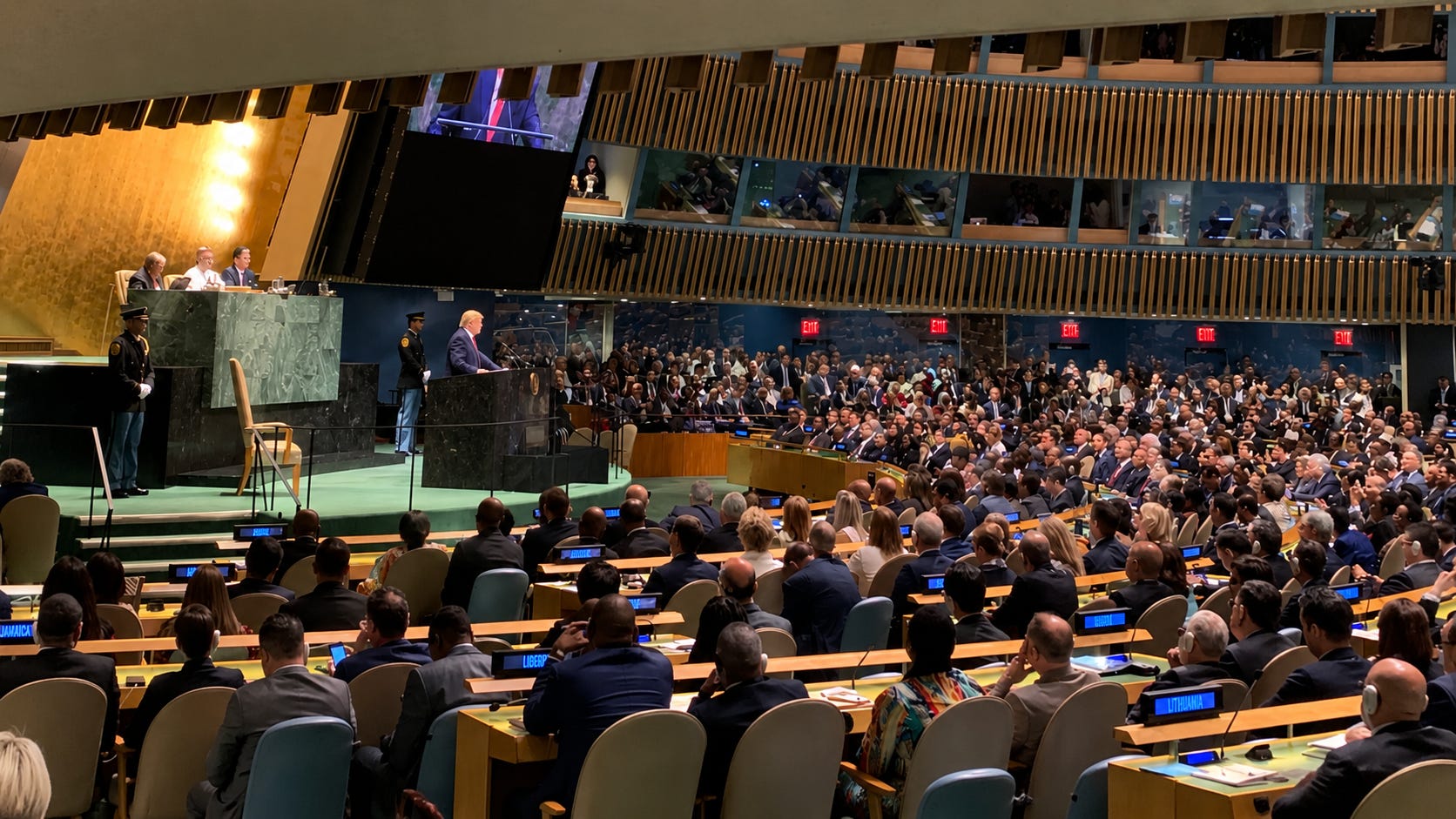
Every September, world leaders descend on New York for the United Nations General Assembly (UNGA). Presidents. Prime ministers. Kings. Staffers with big egos and enough motorcades to make anyone trying to cross Manhattan lose their mind.
Most people know UNGA as the speeches from that famous green marble podium, the staged handshakes and the awkward moments caught on camera. That’s the public version.
For two years, I was Vice President Mike Pence’s lead for UNGA, and I can tell you a lot of the real diplomacy happens around those speeches, not during them. Schedules changed right up until a meeting started. It was absolutely exhausting, at times incredibly frustrating, and I loved it.
Today, the General Debate opens with roughly 130 heads of state and government expected in New York. The United States is at war with Iran, and Iran’s president is coming anyway.
So, yeah. There’s a lot going on.
Before you decide none of this has much to do with your life, it does. What happens this week can eventually show up in the price you pay for gas, how prepared we are when the next pandemic hits, and the rules being written around Artificial Intelligence (AI) before most of us have figured out what the hell it’s going to do to our jobs.
Most people aren’t sitting around watching hours of U.N. speeches. I don’t blame you. I care more about what happens after they leave the podium.
The bilat is the whole game
A bilateral, or “bilat,” is a meeting between two countries’ leaders or senior officials. And here’s a number that tells you what UNGA really is: member states have put in roughly 1,000 requests for bilateral meetings this week. The U.N. even has booths delegations can book in half-hour slots. That’s the part of UNGA I know well. We spent weeks, sometimes months, building them.
Then came the people who just wanted to be in the room. Folks at the White House with zero connection to an issue suddenly developed a deep interest in sitting across from a king. When exactly did you become a foreign policy expert? No, you’re not riding in the motorcade either. It’s long enough.
One year I spent months getting Pence a seat at a leaders’ meeting on eliminating terrorist and violent extremist content online, alongside heads of state including King Abdullah II of Jordan and then-New Zealand Prime Minister Jacinda Ardern. Pence was the vice president, not a head of state. Getting him that seat was unusual. I was proud of securing that one for the U.S. delegation. Then Pence dropped out at the last minute. His chief of staff was focused domestically and didn’t understand what it took to get that seat, or why having the American vice president there mattered.
So we sent Kash Patel.
Yes, that Kash Patel. The one now running the FBI who spent part of a congressional hearing last week explaining why bestiality is no longer, in certain circumstances, an automatic disqualifier for an FBI applicant.
I really wish I were making that sentence up.
Kash texted me in a panic. He knew it was a mistake. The message was basically: Get Pence here. And I remember thinking: Oh no, my friends. YOU all screwed this up. I had made every argument for why Pence needed to be there. They overrode me. Now they wanted me to fix it. There was nothing I could do. King Abdullah called Pence, confused. He was gracious. I was furious. Months of work, gone.
A seat at one of these meetings can look insignificant from the outside. It isn’t. Somebody negotiated for it, and somebody on the other side agreed to it. People notice who shows up, and who doesn’t.
I write these Deep Dives to take you inside the rooms where decisions get made—the ones you don’t usually get to see.
Washington doesn’t stay home
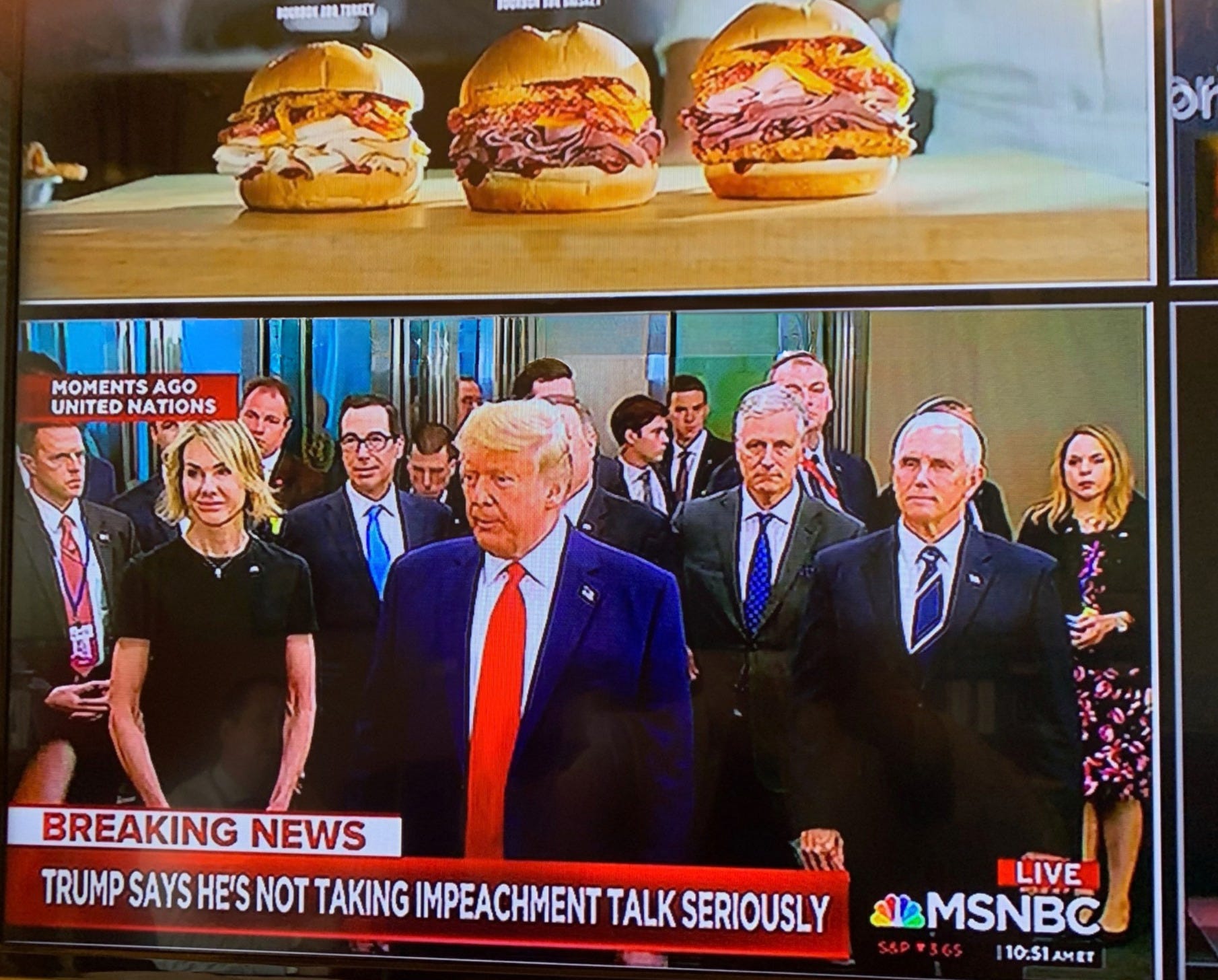
September 2019: we pulled up to UNGA with Trump and Pence, cameras everywhere, and my phone started blowing up as we walked down the corridors. Friends were texting that I was on TV. As an intel officer, my whole job had been staying out of the shot, so my reaction was basically: Why is my face on TV? Yikes. Speaker Nancy Pelosi had announced the formal impeachment inquiry over his actions on Ukraine. There we were, walking into UNGA with the impeachment chyron basically following us through the halls.
You know, a totally normal week.
And in 2018, I sat in the General Assembly hall when Trump told the room his administration had accomplished more than almost any administration in American history. People laughed.
Actual laughter.
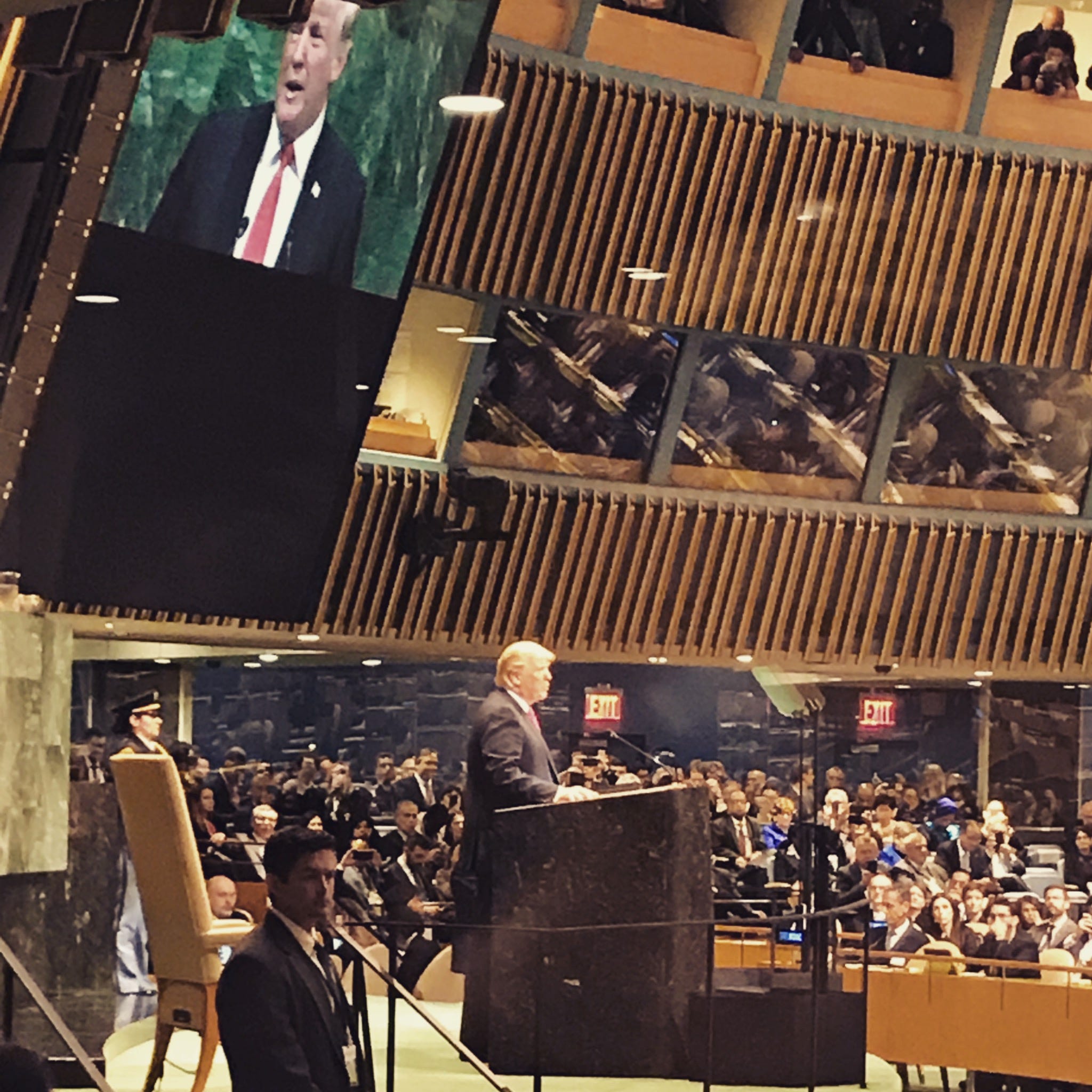
Trump stopped. "Didn’t expect that reaction, but that’s okay." Sitting in that room, you’re hearing an American president through everyone else’s ears.
Last year, Trump returned to that podium and asked another memorable question: What is the purpose of the United Nations? He returns today with that question hanging over a very different world. The U.S. and Israel have been at war with Iran for months. Gaza remains a humanitarian catastrophe. Russia’s war in Ukraine is heading toward another winter.
The General Debate opens this morning with Brazil’s President Lula da Silva, followed by Trump, the traditional order. But like I said, I’m less interested in what happens at the podium than what happens around it.
In fact, that started before the speeches did. Trump spent about an hour at Gracie Mansion Monday with New York Mayor Zohran Mamdani, talking about housing, affordability and the massive Sunnyside Yard project, which would require substantial federal support. Not everything that matters during UNGA happens at the U.N.
Trump has meetings with major allies and partners. One of the most consequential may be with Gulf leaders, who are expected to press him against another escalation with Iran. Saudi Arabia, the UAE, Qatar, Bahrain, Kuwait and Oman have all felt the effects of the war, from attacks and shipping disruptions to the economic fallout.
Zelenskyy is also expected to meet with Trump today, and there’s a lot riding on that conversation. Just two days earlier, Trump pressed him to stop Ukraine’s strikes on Russian oil refineries, citing concerns about the global diesel shortage and rising prices. Zelenskyy is arriving with his own proposal: a mutual pause in attacks on energy infrastructure and targets in the Black Sea. Ukraine says it would stop hitting Russian energy facilities if Moscow stops targeting Ukraine’s energy sector, critical infrastructure and food exports. And the timing isn’t theoretical. Russia and Ukraine traded another round of deadly strikes as Zelenskyy arrived in New York.
Meanwhile, Putin isn’t coming, but his foreign minister, Sergey Lavrov, is.
Venezuela’s acting president, Delcy Rodríguez, will make her U.N. debut, and Trump is expected to have a pull-aside with her—their first face-to-face meeting since the U.S. operation that removed Nicolás Maduro. That’s exactly the kind of encounter that can get buried beneath the speeches.
Then on Wednesday, Iranian President Masoud Pezeshkian speaks. The United States and Iran are at war, and the presidents of both countries will be in the same city during the same High-Level Week. Does anybody from the United States meet with the Iranians? Maybe. Maybe not. Has anyone seen Jared Kushner? Either way, don’t assume silence means nobody is talking. UNGA has plenty of ways for messages to make their way across town.
Trump won’t be there Wednesday to hear Iranian President Masoud Pezeshkian. He’ll be back in Washington because Xi Jinping is coming. That’s one hell of a split screen.
It also tells you something about UNGA. Nearly every government in the world is gathered in New York, but one of the most consequential meetings of the week may happen 200 miles away. Trump goes from UNGA to hosting China’s leader at the White House for Xi’s first visit there in more than a decade. Iran, trade, and artificial intelligence all hang over that meeting. China buys Iranian oil, dominates much of the global rare-earth supply and is America’s principal competitor in AI.
And then there’s Friday.
Who’s in the American chair?
The U.N. is holding a high-level meeting Friday on pandemic prevention, preparedness, and response. This one matters to me personally.
I spent a significant part of the COVID pandemic inside the Trump White House response. I know how brutal the lessons were: testing, early warning, supply chains, vaccines and public communication. This week, the U.N. is asking what the world learned and how to prepare for the next pandemic.
Which brings me back to Xi. Does pandemic preparedness come up between Trump and Xi? What does the United States say at the U.N.? Health Secretary Robert F. Kennedy Jr. spent part of last week speaking to Children’s Health Defense, the organization he once chaired, while years of congressional scrutiny have focused on COVID’s origins, Wuhan and Dr. Fauci. I’m curious who America sends Friday to talk about preventing the next pandemic.
The empty camera
No network television pool camera will travel with Trump to New York. CNN was scheduled for pool duty, but after the White House barred CNN, MS NOW and Politico, the other networks declined to replace it and suspended pool coverage. American journalists are still covering UNGA. What’s missing is the independent network camera that normally travels with the president. I’ve been in those motorcades. Plans change. Reporters shout questions. Unexpected things happen. Sometimes that’s what you want to see–not the carefully worded readout afterward.
What I’m looking for
So yes, I’ll listen to Trump’s speech. But I’ll be watching what happens around it.
Does anything come out of the meeting with Gulf leaders? What does Zelenskyy walk away with? Does anyone talk to Iran? What happens when Trump leaves New York and sits down with Xi?
And that question Trump asked from the podium last year: “What is the purpose of the United Nations?”
Fair question. By Friday, we may have a better answer.
More soon,
Olivia
Thanks so much for your insider's view of the UNGA. It certainly helps to clarify what happens. And thanks, too, for offering to endure Trump's meanderings.
Very interesting! I cannot imagine how difficult it must be to deal with all these (self?) important humans. You must have a lot of patience and negotiation ability.
I just hope we come out of the UNGA and China/Xi meetings no worse off than when we went in.
Thank you for your insight Olivia.