

This week hit close to home.
It started with a gut punch in Virginia.
On Friday, the Virginia Supreme Court struck down the voter-approved congressional redistricting referendum, effectively overruling the will of Virginians who voted YES just weeks ago. I’m deeply disappointed by the decision and personally impacted as one of many candidates who entered this race under those maps. Virginia voters deserved better. It comes right after the U.S. Supreme Court severely weakened the Voting Rights Act, another reminder of how fragile representation and voting rights have become in this country.
Welcome to this week’s Saturday Covfefe.
1. The ICE Watchdogs Are Gone
While the Trump administration rapidly expands immigration detention, the internal Department of Homeland Security office responsible for investigating deaths in custody, medical neglect, and abuse complaints is effectively shutting down. The Office of Immigration Detention Ombudsman (OIDO) was created by Congress in 2019 as an independent watchdog over ICE detention conditions. But according to reporting this week, the office has been gutted. Staffing reportedly dropped from more than 100 employees at the start of 2025 to just five this year.
At the same time, detention is growing fast. More migrants are being held for longer periods, while their immigration cases drag through the courts. The number of people detained for over a year has nearly doubled in just six months, while deaths in ICE custody have reached record highs.
As someone who has worked inside government systems, let me translate what this means plainly: when oversight disappears while enforcement powers grow, abuse becomes easier to hide.
That’s why watchdog offices matter. They create accountability. They force transparency. They make it harder for systems to operate in the dark. And right now, the lights are going out.
🚨 ICE Oversight Office Shuts Down (NPR)
2. America’s Book Bans Are Escalating
A new report from PEN America found that bans on nonfiction books in U.S. schools more than doubled during the last school year. Out of 3,743 titles removed from classrooms and libraries, nearly 30% were nonfiction books, many focused on activism, civil rights movements, LGBTQ+ issues, race, grief, and identity.
Think about that for a second.
Books teaching students about social movements, historical injustice, and marginalized communities are increasingly being treated as dangerous. Among the books targeted were Night, the Holocaust memoir by Elie Wiesel, alongside books about puberty, identity, and Indigenous civilizations.
Meanwhile, dystopian novels like Fahrenheit 451 and The Hunger Games are also being removed from shelves. The irony would almost be funny if it weren’t so dangerous. This isn’t about protecting children. It’s about controlling what they’re allowed to understand about power, history, identity, and dissent. Here’s the part people should pay attention to: censorship movements never stop at one category. They expand. First, it’s "inappropriate" books. Then it becomes history. Then journalism. Then expertise itself. Anyone noticing this to be a familiar pattern lately?…
At the same time, reading scores are collapsing nationwide, and America is pulling books off shelves rather than helping kids read more of them.
📚 Nonfiction Book Bans Doubled in U.S. Schools (The Guardian)
3. Trump Is Redefining "Terrorism"
The Trump administration just released a new national counterterrorism strategy, and it marks a major shift in how the federal government defines threats inside the United States. The strategy expands the focus of counterterrorism beyond foreign jihadist organizations to include drug cartels and loosely defined domestic "left-wing extremist" movements, including Antifa. Administration officials say they plan to "map" members and "cripple them operationally" using expanded law enforcement and surveillance tools.
As someone who spent years working in counterterrorism and national security, let me be very clear: words matter in this space. Definitions matter. Authorities matter. Counterterrorism powers are among the most aggressive tools the government possesses. They were built after 9/11 to stop mass-casualty attacks and foreign terrorist networks. Expanding those frameworks into broad ideological territory inside the United States should concern every American, regardless of politics. Especially because the actual threat data tells a different story.
According to analysis cited in the reporting, right-wing extremists carried out far more deadly attacks over the last decade than left-wing extremists. Having worked on these threats during my time in homeland security, I know that to be true. Yet the administration is now elevating “violent left-wing ideology” as a central national security priority. For the record, this isn’t new. I witnessed attempts firsthand to push this narrative during Trump 1.0 as well.
When governments start blurring the line between violent extremism and loosely defined political movements, the risk isn’t just overreach. The risk is that national security tools become politicized. And once that door opens, it rarely closes cleanly.
⚠️ Trump Expands Counterterrorism Targets (TIME)
4. White Nationalists Found A New Recruitment Tool
This is one of the more disturbing stories I’ve read this week.
A new report details how white nationalist groups and militias are increasingly showing up after natural disasters, not just to "help," but to build followers, soften their public image, and spread anti-government extremism. After Hurricane Helene devastated parts of North Carolina, local officials say armed far-right groups descended on affected communities, claiming they were there to restore "law and order." Some spread conspiracy theories about FEMA. Others filmed themselves handing out supplies for social media content.
One white nationalist organizer openly admitted the strategy:
Show up during a crisis, help people, hand out flyers, and change how people see them. This matters because disasters create something extremists look for: fear, confusion, distrust, and institutional breakdown.
Historically, moments of instability are exactly where radical movements grow. When people lose trust in institutions, they start looking elsewhere for protection, identity, and belonging. Extremist groups understand that. They study it. And increasingly, they’re exploiting it.
The sheriff interviewed in the piece warned this could become "the new normal."
Honestly? That line stayed with me. Because we are living through a moment where conspiracy theories spread faster than verified information, where public trust is collapsing, and where online radicalization pipelines are increasingly bleeding into real-world organizing. And now they’re using natural disasters as branding opportunities.
Pay attention to that.
🌪️ Extremists Use Disasters to Recruit (CBS)
5. Reality Itself Is Starting to Feel Fake
A lot of people are feeling this, but struggling to describe it—the growing sense that reality itself is becoming harder to trust. Not just because of misinformation, but because we’re now living inside an environment where AI-generated content, algorithms, propaganda, conspiracy theories, and nonstop information overload are all colliding at once.
The result? Exhaustion. Distrust. Confusion. And a public increasingly unsure of what’s real.
This may be one of the biggest stories underneath all the others. Whether it’s book bans, extremist recruitment, propaganda ecosystems, conspiracy theories after natural disasters, or governments expanding power through fear…none of it works without information chaos. That’s the point.
When people stop trusting institutions, facts, journalism, expertise, or even their own ability to tell truth from manipulation, societies become easier to fracture. We are seeing that happen in real time. While we used to talk about “fake news,” increasingly, reality itself feels unstable. That’s dangerous territory for any democracy.
Which is why critical thinking, credible journalism, independent voices, media literacy, and actual human connection matter more than ever right now. Do not lose your ability to discern. That may become one of the most important survival skills of this era.
📱 The Collapse of Shared Reality (The Guardian)
🏒One Thing For Your Soul
Sometimes people still surprise you in the best ways. Before Game 5 of the NHL’s Eastern Conference First Round in Buffalo, the microphone cut out during "O Canada." Instead of awkward silence, thousands of fans in the arena simply kept singing together until the anthem singer got a new mic. Just people stepping in together in a small human moment because they could. Buffalo sits right near the Canadian border, and the Sabres have long embraced that connection with Canadian fans. Simple. Human. Kind of beautiful. I might have found a new hockey team to root for…
🇨🇦 Buffalo Fans Sing ‘O Canada’ Together (NHL)
It was a tough week personally, with both friends and family grieving the loss of loved ones. It ended with the news of the Virginia Supreme Court ruling. And that same day ended for me in New Jersey, at an ICE detention facility, saying goodbye to a family friend being deported today. I’ll share more about that experience later.
Thankfully, sometimes life gives you small reminders to keep going anyway. Upon leaving the facility, I later walked into a hotel lobby in Rahway, New Jersey, and a band was playing Three Little Birds. The guitarist smiled and pointed at me.
If he only knew.
"Every little thing, is gonna be alright." I’m holding onto Bob Marley’s wisdom these next few days.
To all the moms out there holding families together through hard moments big and small…
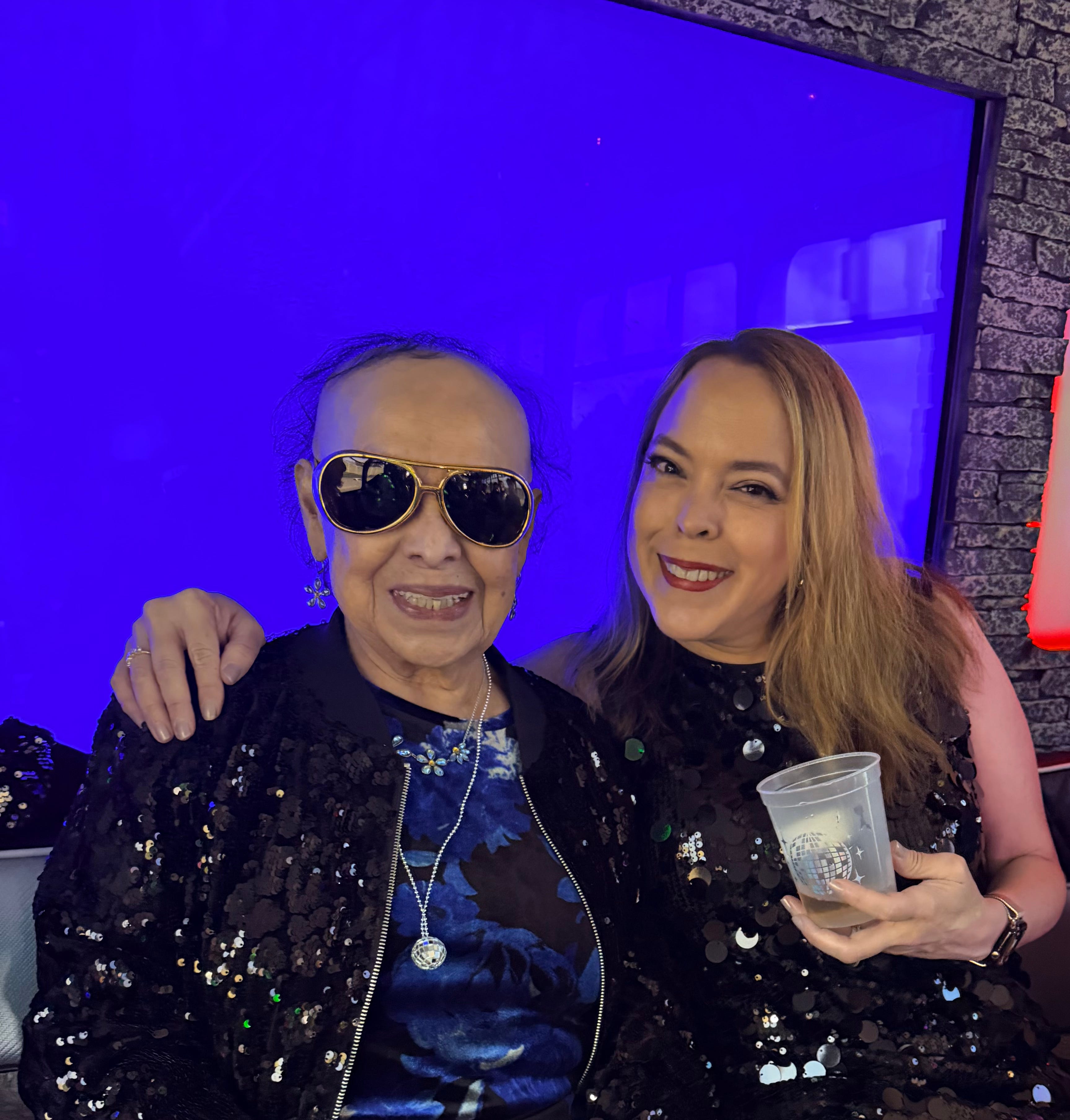
Happy Mother’s Day! 💐
-Olivia
Olivia-Happy Mothers Day to you, too! You articulate so well what I realize are feelings so common to many of us. A shared sense of living through what feel like dystopian times. “This can’t really be happening “ “When will I wake up and realize it’s all a bad dream?” But it isn’t a bad dream, and we need voices like yours to continue to remind us that we are all in this together and we must act if we want to save what has now become our very fragile democracy. Thank you!
Just thank you - and leaders keep hope alive - you will continue to do that - and you didn't find a gem colored dress for nothing - I feel a future for you